
A Guide for North Carolina Parents (Including Neurodiverse Teens) in the Raleigh–Durham–Chapel Hill Area
For many families in the Raleigh–Durham–Chapel Hill area, a teen’s first job is both exciting and nerve-wracking. It’s a meaningful milestone, one that signals growing independence, responsibility, and maturity. At the same time, it can raise questions about readiness, balance, and support.
Whether you live in Chapel Hill, Cary, Fuquay Varina, Raleigh, or Durham, the challenges and opportunities are often similar. With the right fit and thoughtful guidance, a first job can build confidence and real-world skills. Without support, however, it may feel overwhelming, particularly for neurodiverse teens who benefit from additional structure and clarity.
This guide offers North Carolina parents a practical roadmap: why a first job matters, how to assess readiness, how to support your teen without taking over, and what families in the Triangle area should know about youth employment.
Why a First Job Matters
A first job is about far more than earning spending money. It provides real-life practice in responsibility and accountability outside of home and school.
Teens develop:
For teens in competitive academic communities like Raleigh, Cary, and Chapel Hill, these workplace experiences can complement school-based learning in powerful ways.
Planning & Preparation
Start With Interests
Before submitting any applications, pause and evaluate your teen’s motivation and interests. Motivation makes a measurable difference, but teens - especially neurodiverse teens - are more likely to thrive when their job aligns with their true interests
A teen who loves animals and demonstrates responsibility might begin with pet sitting or dog walking in their neighborhood.
A teen interested in art or technology could assist with social media or design for a small local business in Cary or Chapel Hill.
Check Job Readiness
Interest alone is not enough. Here are five readiness areas to consider before applying:
If certain skills are still developing, that doesn’t automatically mean postponing employment. It simply means more structure and support may be necessary at the beginning.
The Parent Role: Coach, Not Manager
Parents often ask: How involved should I be?
Our answer: Early on in the planning and preparation stages, involvement is appropriate but the long-term goal is independence. Think of yourself as a coach.
Helpful coaching can involve:
A simple weekly support plan may include:
Remember: support first. Independence develops step by step.
Finding & Choosing the Right First Job
It can be tempting to want your teen to pursue resume-building internships and prestigious job titles. However, an environment that overwhelms your teen may lead to stress and burnout.
The right fit considers:
When a job matches your teen’s interests and strengths, they are far more likely to build confidence and resilience.
Finding Opportunities
For many teens in the Triangle area, opportunities for their first job are often close to home and within familiar community spaces.
Common first jobs for teens include:
How to Search Effectively
Encourage your teen to:
Finally, have your teen track applications in a notebook or spreadsheet. This small step builds organization, follow-through, and accountability, skills that matter just as much as the job itself.
Applications & Interviews
If a resume is required remember this: Resumes should be simple and age-appropriate. Your teen should create their own resume, with your help.
Interviewing is intimidating! Practice, practice, practice. Discuss common questions and answers. Allow notes if helpful. Prepare for virtual interviews as well as in-person interviews.
Scheduling and Preventing Burnout
When it comes to scheduling, balance is critical. If your teen is still in school, this is especially important. Discuss priorities like classwork, sports, extracurricular activities, social time, and other commitments.
It’s usually a good idea to start conservatively. Your teen may try 8 hours per week during the school year. Then they can increase if grades and well-being remain stable.
Watch for early signs of burnout, such as irritability, falling grades, or chronic fatigue. Regular check-ins allow adjustments before stress escalates and situations become overwhelming.
Supporting Neurodiverse Teens at Work
Neurodiverse teens often bring strengths highly valued in workplaces like attention to detail, creativity, honesty, and persistence.
They may also benefit from support with transitions, unclear instructions, sensory demands, or social nuance.
Helpful workplace strategies may include:
Always prioritize roles with predictable routines and approachable supervisors. Clear expectations reduce anxiety and build confidence.
Disclosure and Accommodations
Teens are not required to disclose diagnoses during applications or interviews. This decision is personal and can be revisited later if support becomes necessary.
Instead, encourage the use of needs-based language, such as:
“Written instructions help me stay organized.”
“Brief check-ins help me confirm expectations.”
Reasonable support might include predictable schedules, written task lists, or clarification during busy shifts. These accommodations are often simple and beneficial for many employees.
North Carolina Youth Employment Basics
Families in Raleigh, Durham, Chapel Hill, Cary, and Fuquay Varina should remember:
Teens initiate the work permit process online. Parents and employers complete required sections.
Final Perspective
A first job is not a lifelong commitment, it is a learning experience.
The true goals are:
With realistic expectations and supportive coaching, parents can help both neurotypical and neurodiverse teens enter the workforce safely and successfully.
If your family is navigating readiness, executive functioning challenges, or workplace anxiety, professional guidance can provide additional structure and support. Our practice serves families in Chapel Hill, Cary, and Fuquay Varina, helping teens build the skills they need for long-term independence and success.
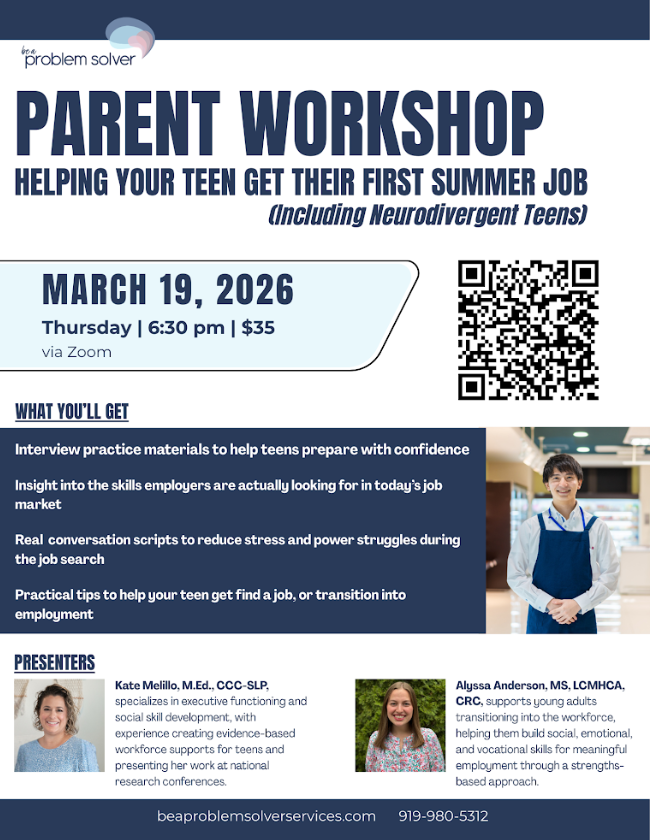
Join Our March Workshop
Ready to help your teen take that first big step toward independence? Join us for Helping Your Teen Get Their First Job, a practical, parent-focused workshop where we’ll walk through how to support your teen — including neurodivergent teens — in navigating resumes, interviews, workplace expectations, and confidence-building. Whether your teen is just starting to think about work or needs help getting over the finish line, this session will give you tools you can use right away. Save your spot here:
https://stan.store/beaproblemsolver/p/join-the-workshop-fibmgy81
Offices in Cary, Chapel Hill, and Fuquay Varina, NC