
Mental Health Doesn’t Follow a Calendar: Why We’re Talking About Suicide Prevention After September
Parenting a tween or teen comes with a whole new set of worries. Somewhere between navigating friendships, managing screen time, keeping up with schoolwork, and trying to get more than a one-word answer to “How was your day?”, parents are also trying to figure out what’s really going on in their child’s world. It’s not always easy!
Teens aren’t exactly known for volunteering information about their feelings. Some wear their emotions on their sleeves, while others keep everything bottled up. Sometimes, the same kid who talked your ear off yesterday barely says two words today.
So how do you know what’s typical teenage behavior and when something might be wrong? It’s a question we often hear from parents.
September is recognized as Suicide Prevention Month, and the awareness it brings is incredibly valuable. But the emotional challenges kids and teens face don’t conveniently fit into one month of the year.
A friendship can fall apart in February. Bullying can happen in April. A first heartbreak might hit in July. And some teens quietly carry feelings of sadness, anxiety, loneliness, or hopelessness for weeks or even months without anyone realizing just how much they’re struggling.
Mental health doesn’t follow a calendar. And neither should the conversations we have about it.
That’s why we’re talking about suicide prevention in November, long after the awareness campaigns have wrapped up.
It’s not because we want parents to worry about every slammed bedroom door, bad mood, or “leave me alone.” Those moments are part of raising adolescents, too. We’re talking about it because understanding the difference between typical ups and downs and signs of something more serious matters.
As therapists who work with children, teens, and families, we want parents to feel more comfortable having these conversations before there’s a crisis. Sometimes, that starts with noticing that something feels different, asking a question, and being willing to listen, even when the conversation is uncomfortable.
When Your Teen Says Something Scary
There are some things you hope you’ll never hear your child say.
“I don’t want to be here anymore.”
“I wish I could just disappear.”
“Sometimes I think about killing myself.”
Even reading those words can make your stomach drop. Hearing them come from your own child? That’s a whole different level of fear.
Your mind might immediately jump to a hundred questions: Are they serious? Is this something they’ve been thinking about for a while? Did I miss something? What am I supposed to say?
Underneath all those questions is probably the one that scares you the most: Is my child safe?
It’s completely understandable to feel overwhelmed in that moment. When your child is hurting, every parenting instinct tells you to make it better. Right now. Here’s something important we want parents to remember: You can take what your child is saying very seriously without letting panic take over.
Knowing what to look for and how to ask the right questions can help you figure out what your child needs.
What Should Parents Watch For?
Not every teen is going to come right out and tell you they’re struggling. Sometimes the signs are much quieter. Maybe your usually social teen has started spending all their time alone. Maybe they’re sleeping more, pulling away from friends, or just don’t seem like themselves lately.
Also, teenagers aren’t exactly known for their consistent moods. So how do you know what’s typical adolescent behavior and what might be cause for concern?
Here are some signs worth paying attention to:
Pay particular attention when these changes are new, becoming more frequent or intense, or happening alongside a major stressor like bullying, a breakup, friendship problems, or a significant loss.
Not every change means your teen is suicidal, but if something feels off, it’s worth checking in rather than brushing it off as “just being a teenager.”
Some signs, particularly talking about suicide or making a plan, warrant urgent attention rather than waiting to see if things improve.
Start With the Conversation
As parents, we’re natural fixers. When our kids are hurting, we want to make it better. We might remind them how much they’re loved, point out all the good things in their lives, or reassure them that everything will be okay.
Sometimes fear gets the better of us though. Hearing your child say something frightening can make you react before you’ve had a chance to think about how your words might land.
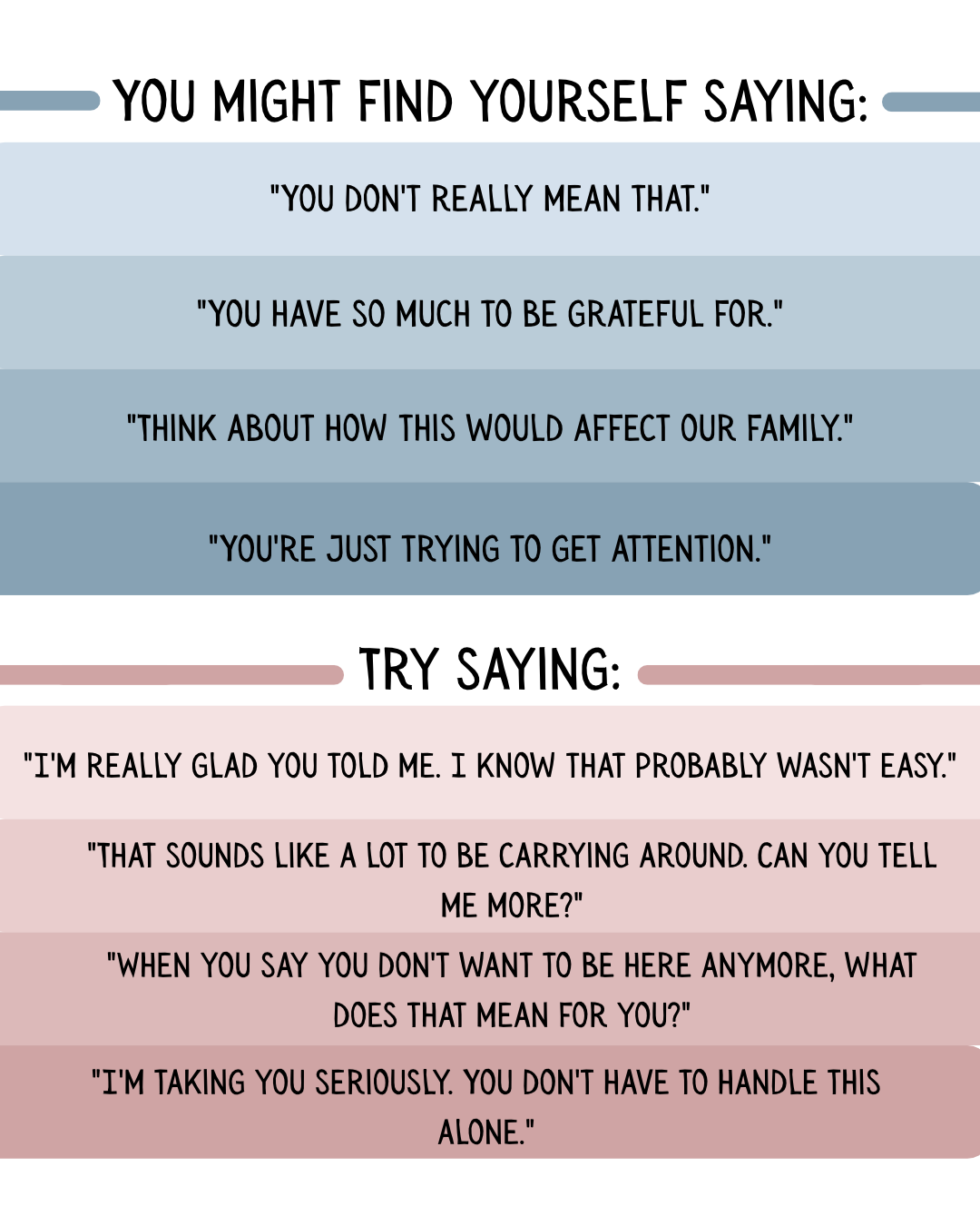
And sometimes, that means asking a question no parent ever wants to ask:
“Are you thinking about killing yourself?”
Yes, it’s a scary question, and many parents worry that asking it might put the idea into their child’s head. But research shows that asking directly about suicide does not increase suicidal thoughts. Instead, it lets your teen know you’re willing to hear the hard stuff, even when it’s uncomfortable.
And if their answer is yes? Try to stay calm, thank them for being honest, and ask whether they’ve thought about how they might hurt themselves or have access to anything they could use.
A disclosure of suicidal thoughts deserves prompt professional assessment, even if your teen says they don’t have a plan. Stay with them while you arrange help, and seek emergency care if they’re in immediate danger.
Your teen doesn’t need you to make their feelings disappear. They need to know they don’t have to carry them alone.
Not Every Troubling Thought Means the Same Thing
Here’s something else that’s important for parents to understand: intrusive thoughts, suicidal thoughts, self-harm, and an active suicide plan aren’t all the same thing.
These experiences can sound similar, especially when a teen is having trouble explaining what they’re feeling. But understanding the differences can help parents ask better questions and recognize when immediate intervention is needed.
Intrusive Thoughts
Intrusive thoughts are unwanted, upsetting thoughts or images that pop into someone’s mind without them choosing to think about them.
For example, a teen might have a sudden thought like: “What if I jumped?” or “What if I hurt myself?”
The important distinction is that the thought is unwanted. The teen may actually feel frightened or disturbed by it and have no desire to act on it.
Having an intrusive thought doesn’t automatically mean someone wants to die. However, when these thoughts involve self-harm or death, it’s worth discussing them with a mental health professional to better understand what your child is experiencing.
Suicidal Thoughts (Suicidal Ideation)
Suicidal thoughts can range from wishing you weren’t alive to actively thinking about ending your life.
A teen might say something like, “I wish I could just go to sleep and not wake up,” or describe more specific thoughts about suicide. Even if your teen says they would never act on these thoughts, they still need to be taken seriously.
A mental health professional can help assess what’s happening, including how often the thoughts occur, how intense they are, whether there’s an intention or plan to act, and other important safety concerns.
Self-Harm
Self-harm involves intentionally hurting oneself. While self-harm and suicidal behavior can overlap, they’re not always the same thing.
Some teens self-harm as a way of coping with overwhelming emotions, anger, or emotional numbness, without intending to end their lives. Others may experience suicidal thoughts alongside self-harm.
It’s important not to assume you understand the reason behind the behavior.
A question like “When you hurt yourself, were you trying to die, or were you trying to cope with something you were feeling?” can help open that conversation.
Regardless of the answer, self-harm deserves professional attention and support.
An Active Suicide Plan
An active suicide plan is an especially urgent concern. This may involve a teen having specific thoughts about how they would end their life, access to a method, or an intention to act.
This isn’t a situation where parents should simply “keep an eye on things” and hope the feelings pass. Immediate professional help is needed.
It’s also important to remember that a teen doesn’t have to describe a detailed plan to be at serious risk. If you believe your child may act on suicidal thoughts, treat it as an emergency.
When You Need Help Right Away
Knowing your child needs help and knowing where to turn are two different things. And when you’re worried about their safety, figuring out the next step can feel overwhelming.
If your child is experiencing suicidal thoughts, self-harm, or other significant mental health concerns, reach out promptly to a qualified mental health professional, pediatrician, or crisis service for guidance.
While arranging help, stay with your child if suicide risk is a concern and reduce access to medications, firearms, and other potentially dangerous items.
If your child has already harmed themselves, may act on suicidal thoughts soon, or you’re unable to keep them safe, call 911 or go to the nearest emergency department.
For other urgent mental health concerns that don’t require emergency medical treatment, behavioral health urgent care centers and crisis services may be appropriate.
Here are resources available to families in Fuquay-Varina and the surrounding communities.
Local Mental Health Crisis Resources
The Hope Center for Youth and Family Crisis – Fuquay-Varina
400 W. Ransom Street, Fuquay-Varina, NC 27526
Phone: 877-888-7849
Open 24 hours a day, 7 days a week.
The Hope Center provides specialized behavioral health crisis services for children and adolescents. Families can contact the center for guidance about urgent assessments, stabilization, and appropriate next steps. Call ahead to confirm services and eligibility.
Local Emergency Departments
Emergency departments are open 24 hours a day and can evaluate psychiatric emergencies, including situations involving suicide attempts, immediate safety concerns, or medical complications from self-harm.
If your child has taken an overdose, seriously injured themselves, or is in immediate danger, call 911 or seek emergency medical care.
Crisis Hotlines and Immediate Support
988 Suicide & Crisis Lifeline
Call or text 988 anytime, day or night, or visit 988lifeline.org for online chat support.
And here’s something parents may not realize: You can call 988 even if you’re not the person experiencing suicidal thoughts.
Prevention Is More Than One Conversation
We spend a lot of time teaching our kids how to handle the challenges they’ll encounter as they grow up. We talk about friendships, social media, relationships, school, and making good decisions.
Mental health deserves a place in those everyday conversations, too. It doesn’t always have to be a big, serious sit-down at the kitchen table. Sometimes it’s checking in during a car ride, noticing when your teen seems quieter than usual, or following up on something they mentioned a few days ago.
It’s also showing them that they can have big, messy, uncomfortable feelings without being judged or immediately handed a solution. Will that mean your teen suddenly starts sharing every thought and feeling with you? Probably not. They’re still teenagers, after all.
But over time, those small moments of connection can help build trust and make it easier for them to come to you when something really matters. We can’t prevent every heartbreak, disappointment, or difficult experience our children will face. And even in loving, supportive families, mental health crises can happen.
What we can do is keep showing up, pay attention, take concerns seriously, and make sure our kids know that asking for help is always an option.
Suicide prevention doesn’t begin and end with an awareness month. It’s part of the ongoing conversations, relationships, and support systems we build around our kids all year long.
This article is intended for educational purposes and does not replace an individualized assessment or professional mental health care.
Offices in Cary, Chapel Hill, and Fuquay Varina, NC
